

Forum Replies Created
- AuthorPosts
- Participant
Hello Carole.
Thank you for getting in touch your post has brought back many fond memories for me I had many reasons for visiting the area around St Paul’s Church from the time just after the War
I remember the illegal bookmakers that frequented many of the back alleys, pubs and works at that time I also had many friends that used the local pubs
I recall many a Sunday morning breakfast trip, from the Swan with two necks. My father had relations the Thomas’s in Ablow Street. The only saving grace from this one time tight knit community is that they are re-furbishing the redundant Snbeamland and get people back living in the area again.Below the old cellar head.
ParticipantThis what this forum is all about To help one and other to discover the past. Well done!
Below the old cellar head.
ParticipantSorry Alison can’t find any trace of the name Withers in the licensed trade. nor any mention of the Hop Pole. Suggest you call in or give the Wolverhampton Archives a bell their address is on the internet.
BillyBelow the old cellar head.
ParticipantPerhaps if we knew the names of your ancestors Alison It would be a great help.
Below the old cellar head.
ParticipantWelcome on board
Below the old cellar head.
Participant

This crowded scene in Dudley Street in 1946, has a wealth of interest .
The view is toward Queen Square ,with the “British Home Stores on your left, and “Marks and Spencer” opposite on your right.
To the right of “Joans” ladies fashion shop, was the “Dudley Arms” public house, with a similar frontage to the “Giffard Arms” in Victoria street.
In 1954. “Joans” will move from this spot and re-locate in Queen Square on the corner of Lich Gates, in premises up till then owned by ‘Copes’ wines and spirit merchants, and British Home Stores will then extend and take up the space left by Joans.
Next door and above the “Dolcis” shoe shop was photographers, and I doubt there’s a family in Wolverhampton that haven’t a photo tucked away somewhere, that was taken at “Jerome’s”.
“Buxton & Bonnet were next door, they and Foster Bros (close by on the corner of Bilston street,) held the sway in town for smart childrens’ wear, should clothing coupon’s be available.
Across the road with the fading *“Dove of Peace” sign on the wall was the top menswear shop, the ‘Fifty Shilling Tailors’, and above the tailors, and the next door premises, with its side entrance, was the “Savoy ”billiard hall were most of the “sharks’ of the day would ply their skills.
But what makes this photo extra special for me, is that it shows a flat fronted electric milk float on its return journey to the “Levedale.”
The entrance to the Levedale dairy in the 40’s and 50’s, was situated at the far end of Dudley Street in between Two former public houses, the “Kings Head’ and the Hen and Chickens.”
*The ‘Dove of Peace’ was on a protruding wall on the east side of Dudley Street, close to Queen Street. It remained there till this building was demolished in the early 1960’s.
The story goes that the Dove was painted on the wall in 1939, to end an acrimonious dispute between to rival tailors businesses who were neighbours, Burtons and the Fifty -Shilling Tailors.Below the old cellar head.
ParticipantWhen Chapel Ash was at its most elegant it heralded shops and trades of every description. Four doors from Meadow Street during the first World War stood the ornate frontage of A.M.Ranger, Confectionist.


In its place today stands the appropriately name Co-operative funeralcare. Now Chapel Ash certainly looks as though it has been through the wars of late. and there are a few buildings I would say are in need of such drastic measures.


Below the old cellar head.
Participant

THE HAND INN TUNWALL STREET
Best remembered as “Lindy Lou” 19 Victoria Street and 42 St John’s Street.
An early recollection.
In a Terrier of Sir Walter Leveson’s Wolverhampton estates dated 29th September 1609, one of his eighty or so tenants is named as Nicholas Worthington, occupier of one messuage and common Inne called the Hand in Tunwall Street adjoyinge John’s Lane on the South Syde.
There can be no doubts in identifying this Inn site. Tunwall Street is the ancient name for Victoria Street, and Johns Lane most of which is now absorbed in to the Mander Centre.
On the 12th June 1750 the freehold passed to John Jesson of Graseley, a prosperous Wolverhampton Attorney.
As to the occupancy during its ownership of the Jessons the Town rate Books have survived, and local trade directories give a few clues.
By 1818 the property or part of it was being used as a Bakery by Edward Farmer 19 Cock Street.Finally, in 1873, Henry Hughes established his bakery business and the very long family connection of the following century is to well known to need. a repetition here.
The writer was shown over the building in 1957 courtesy of the then present Mr Hughes who had recently renamed the former “Copper Kettle” – “Lindy Lou.”
At the front of the shop premises in Victoria he had opened a business similar to the Mothercare shops today. At the side of the shop in St John’s Street, he was stocking Fruit and Veg.
Below the old cellar head.
Participant

Below the old cellar head.
ParticipantA friend from my youth Albert Edwards late of Thornley Street knew there had been a well established Public House in Queen Square But couldn’t recall where it was or when it disappeared. The Public House in question was “Harleys Vaults” I recall this building very well – in fact it was one of the first pubs I went in. The licensee at the time in the 1940’s, was Jimmy Hart a friend of my fathers and as this pub only had a six day licence Dad and I would call in and see jimmy on a Sunday morning when the pub was officially closed.</p>
<p>https://flic.kr/p/Kre2Gk</p>
<p>Well here you will see Harleys Vaults as it appeared in the time of the first World War, on the far left on this photograph,and its appearance would be more or less the same as I recall in the 1940’s, the facade very much in keeping with the “Posada”its companion in Lichfield Street.Below the old cellar head.
ParticipantBelow the old cellar head.
Participant

Below the old cellar head.
ParticipantWhile researching stories from the 1st World War in the many old newspapers I have I came across was this interesting advert.</p>
<p>Apparently in 1914. The words Obesity and Fat, were never used in regard to the human figure. In those austere days you where either Lean or Stout!.</p>
<p>And in November 1914 according to the Daily Mirror this then unknown dietician had come up with an amazing discovery to shed the pounds of Stout ladies.</p>
<p>All this with No poisonous drugs, no harmful exercises, no starvation diet, but the simplest of home methods.<br />
Miss Hartland the lady in question, has considerable means has kindly consented to send a copy of her book free to anyone interested in her discovery<br />
.<br />
All she asks is that a penny stamp should be enclosed for postage.<br />
Address:</p>
<p>Winifred Grace Hartland, (Dept 749) Diamond House, Hatton Garden, London,E.C. </p>Below the old cellar head.
ParticipantMy Wife’s Grandfather Returned from South Africa in 1902. Buried in Belgium fifteen years later


Below the old cellar head.
ParticipantToday in 2016, and perhaps as I did in 1958, if you are looking for a select shop to purchase a engagement or Wedding ring the name Rudell’s springs to mind in Darlington Street.
But it wasn’t always that way.
H Samuel now thats a name most Wulfrunians are familiar with . Older folk will recall the classic facade of the pre-war building on the corner of Queen Street.


But perhaps less known was their much older rival competitor James Langman a little further down Dudley Street whose premises were later gobbled up by Marks and Spencer.
What brought these two Wolverhampton Jewellers to mind. Well I had a very interesting e-mail from my friend and fellow member of Lost Wolverhampton now residing in Winsconsin. John Favill.
To quote John: Dear Billy,
Just recently my wife Mae found a receipt for the purchase of her mothers wedding ring made out on July 17th 1929 at James Langman Ltd., The Gold House 21 Dudley Street.
The cost of the plain gold ring cost £2 five shillings, a measure of how times have changed over 87 years.
To prove how popular were Langmans at the time I also had a copy of a similar receipt from 1924 When my grandfather purchased a 18 carat Diamond & Coral ring unmounted for £3.ten shillings.Below the old cellar head.
ParticipantA query arrived today from Phil –
Hi All,
I’m researching the family tree of the Austins/Austin family, with one particular John Austins owning 25 houses on Inkerman Street between the 1840’s and 1890’s.
Would anyone know where I could get some images of Inkerman Street during Victorian times, or another street that may have looked similar?Many thanks
PhilInkerman Street 1960’s Phil wouldn’t have changed much in appearance since it was cut.

Below the old cellar head.
ParticipantThe above post was sent to me by my dear friend and member John Favill living now in the U S A who spent a prolific career in the Wolverhampton motor cycle industry
Below the old cellar head.
ParticipantFast forward fifty years nothings changed except the weather.


Below the old cellar head.
ParticipantCorner of High Street of the past 1960’s – Do I spot a white Austin 1800


Below the old cellar head.
ParticipantThere can’t be many Facebook members that have a great knowledge of our two tragically lost Arcades .
How we came to lose one of these Majestic Edwardian buildings never mind the two is beyond me.
But alas we did .

This plan is dated 1930 and it gives you a rough idea of the lay-out of the Queens’ Arcade.
Were in my youth you would have seen Jaeger Fashions and Hindes tobacconists either side of Its main entrance in the Square .
A children’s favourite pastime ,was a visit to Fletchers booksellers and check out the stamps, (every lad collected foreign stamps at that time) then down the steps into Victoria Street.As you can see it wasn’t quite as large and lengthy as it companion the Central Arcade and more circular in shape. housing probably ten businesses downstairs with offices above.
Most younger Wulfrunians seem to get the changes and occupants mixed up in the two arcades now I spent many happy hours exploring both of these icons and will only be to pleased to pass on any information regarding them.
Below the old cellar head.
Participant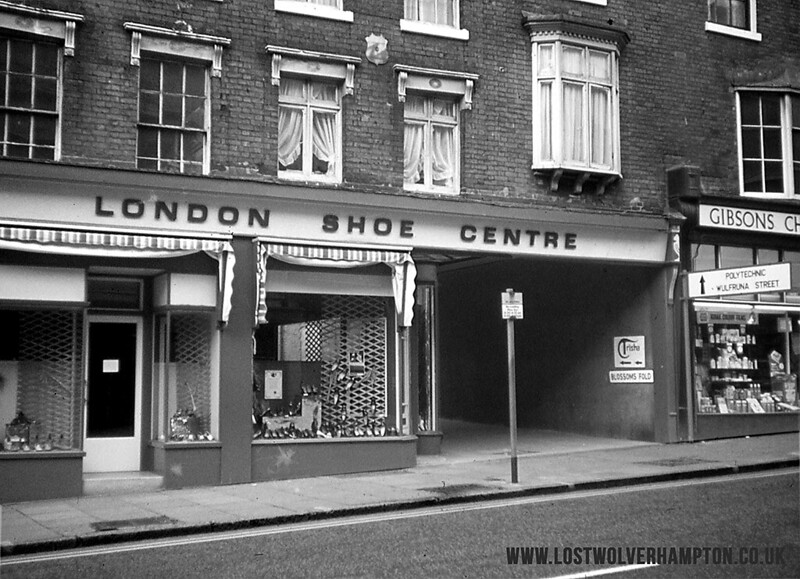
Below the old cellar head.
Participant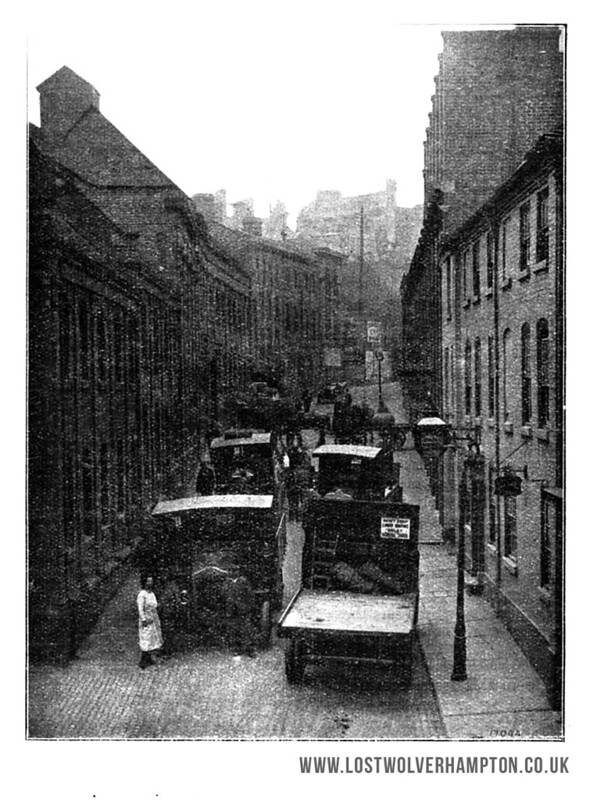

Looking up from Farmers fold circa 1920 we see a century ago Mander Bros Varnish Works covered most of the east end on both sides of St Johns Street.


Fast forward forty years and the remains of Manders Works will be transferred to its premises at Old Heath Road and these recently opened shops at the bottom of the east end will together with the old works be demolished to make way for the New Mander Centre.
Below the old cellar head.
ParticipantYou may have gathered by now my favourite animal is the Elephant.

The tragic event that took place this Easter Week regarding that revered Muslem shopkeeper brought to mind this story I was told many years ago.
Jalal-ud din Rumi, the 13th – Century Sufi (d 1273), was perhaps the greatest of all the mystical writers of Islam and lived in Konya, in Anatolia, at a time when its population was almost equally divided between Muslims, Christians and Jews
When he was asked about the relationship between these three apparently incompatible religions, he told a story about a city of the blind.“ The City of the Blind”
One day the news came that an elephant was passing outside the city, so the townsfolk decided to send a delegation to report back as to what an elephant was. Three men left and stumbled forwards until they found the beast.
They felt the animal and headed back to report.
The first man said “ An elephant is like a vast snake!” The second man was indignant at hearing this: What nonsense!” he said “I felt the elephant and what it most resembles is a huge pillar.” The third man shook his head and said “Both these men are liars! I felt the elephant and it resembles a broad flat fan”.
All three men stuck by their stories and for the rest of their lives refused to speak to each other, each professed that they and only they new the truth.
Of course all three blind men had a measure of insight. The first felt the trunk of the elephant, the second the leg, and the third the ear, but not one had begun to grasp the totality or the greatness of the beast.
If only they had listened to one another, they might have grasped the true nature of the beast. But they were to proud and preferred to keep to their own half- truths.
“So it is with us ,” said jalal-ud-din “We see the Almighty one way, the jews have a slightly different conception and the Christians a third. To us all our different visions are irreconcilable.
But what we forget is that before God we are like blind men stumbling about in total darkness.
I wonder will mankind ever see the dawn of a day when “Out of the Darkness will come the Light”
Below the old cellar head.
ParticipantIt was a terrible shame and a definite mistake on the part of our Corporation
When they demolished our century old market hall and built the Civic Centre on the Site.
But even that costly blow to our heritage could have been softened if they had left the site as an open space to form a nice tree lined Square.What do you think.


Below the old cellar head.
Participant

The Market hall Refreshment Room pictured in the late 1800’s. Mrs Hinds who managed the refreshment rooms for more than 60 years is seen with members of her staff. In those days Dinners were offered for 4d, 5d, 6d,and 7d.!.
I don’t suppose there are any old patrons left who perhaps in 1901,had a quiet 4d meal and a pint after the gathering in the Square for Queen Victoria’s funeral
But there are still many about who will still recall those heady day’s of 1953 enjoying their breakfast or lunch, when the Market was gaily decorated out for its Centenary and also the Coronation of Queen Elizabeth.
Below the old cellar head.
Participant

In the 1820’s The New Hotel was built on the corner of Johns Lane and Cock Street to cater for the ever increasing Coach Trade at that time with the opening of Telfords new cutting through the Rock at Tettenhall.
It is seen above some 140 years later.
Below the old cellar head.
ParticipantDoes this look familiar, well these are as you see.
James’s Turkish Baths, Albany Road, Wolverhampton
Archibald Reynolds James opened his Turkish bath in 1888, and it continued as James’s Turkish Baths until 1914 when it was owned by the Wolverhampton Turkish Baths Co Ltd.
In 1901 it was open daily for ‘Ladies and Gentlemen’ from nine in the morning till ten at night.
According to the time of day, bathers paid 2/-, 1/6, or 1/-
As Wolverhampton Turkish Baths it remained open until 1935.
Now I know that listed in 1960 there were two spiritualist meeting houses in close proximity to one another in Wolverhampton.
The National Spiritualist Church in Waterloo Road and The Wolverhampton Spiritualist Church in Albany Road .
At present I am assuming When the National Spiritualists came originally to Waterloo Road, a splinter group calling themselves The Wolverhampton Spiritualists, took over the old premises, of the vacated Turkish baths, this I reckon took place in the late 1930’s
I am sure there is someone on the net that can enlighten us more on the situation.
Below the old cellar head.
ParticipantJenny Baines a new welcome member to the group posted this evocative picture of fine buildings in Albany Road, awaiting the hammer as the ring-road approaches.mid 1960’s.


She had been under the impression the dominant building in the centre was the original Spiritualist Church and this was its former home. She assumed was in Drummond Street behind were the Wolverhampton Spiritualist Church stands today. in Waterloo Road opposite the Wolves, Waterloo Road Stand.
I said to Jenny when I met her last week at a little talk I did for the members at the church that the photo was not taken as she thought in Drummond Street.
Below the old cellar head.
ParticipantIn my life time I can honestly say I have been lucky enough to have never lived above half a mile from a Steam Railway Does that says it all..
I once watched the famous Wolverhampton Sign writer re-paint this slogan.


Below the old cellar head.
ParticipantHi Kath
I thought I was never going to get a reply on this puzzle as its been nearly twelve months since I posted it.
It was discovered in 1953 above the gate of our old retail market on the west side of St Peters church during alterationsBelow the old cellar head.
ParticipantHi Phil
Woden Road circa 1950? My wife isn’t on this photo but my cousin Janet Nickolds from Old fallings is.Recognise anyone?

Below the old cellar head.
ParticipantPart of Philip Barnands Most interesting comment.
I do not recall your wife’s name, though of course I was a pupil at Woden R’oad Infants and Junior school. I may have started a bit late, at the age of 5 in September 1944, because I had some catching-up to do, eventually becoming the youngest in my year. One of our class photos appeared in the Black Country Bugle.
I think Swinford Road had semi-detached houses? A sure sign of affluence! Does your wife remember the Blood family, whom I think lived in Stratton Street, maybe Prosser Street? They were a large family and Mrs Blood seemed to be permanently pregnant. I once embarrassed my mother in Bray’s Park Village butcher’s shop, when I asked her why Mrs Blood’s tummy was so big. I was told to keep quiet!
Below the old cellar head.
ParticipantNo.2 photo

The same row looking the opposite way,down from Charles Street, The larger building was once an old licenced house known as “The Talbot” and was adjacent to a Banks’s pub, “The Staffordshire Knot” on the corner of Charles Street.
Billy Howe our “Tree Grew In North Street.”
Below the old cellar head.
ParticipantNo.1 photo

Shows a snowy view of Deanery Row running up towards Charles Street from the Londes with the railings on the bottom right at the rear of the gardens of The Feathers public house.
The Feathers building in what was once North Street, is still standing today albeit now de-licenced, and now incorporated in to the University
Below the old cellar head.
ParticipantHad this interesting enquiry today from
Katie Harper-Mason.Hi billy,would you have any pictures of the old deanery row before it was demolished,my mother lived there briefly as a very small child.
Hello Katie
Deanery Row and similar streets around St Peter’s didn’t offer much interest to the photographic media much in the early days, being just a simple row of Eighteenth century terraced houses. Fortunately we have Jim Dowdall of the Wolverhampton Photo Graphic Society to thank for at least a couple.
He was asked by the Corporation when at the time the houses around Charles Street was being demolished in the mid 1950’s., if he would like to go and take photographs of the area which I am pleased to say;he did .
And of course we have to thank David Clare and others for having the foresite to record the still on going changing times around the old Deanery from the last half a century. I will be doing a post of this on the Howl at some point so keep looking.
In the mean time I will post the two pictures of Jim’s from the time before the clearance, on the forum.Please join it.
Below the old cellar head.
ParticipantI did this little story awhile ago and It was instantly brought to mind when I received this similar most interesting story from John Favill our dear friend and member from the U.S.A.


The Little Men
John writes:
My cousin sent me a copy of a letter found in her father’s papers after he had died. her father Charles was my father’s youngest brother.
The hand written letter was dated September 1857 and sent from Dunfermline in Scotland to my great-grandfather in Monks Coppenhall with the following phrase, “Dr Mark desires me to relate to you that your son is in good health, and quite happy amongst the rest of the little men.”The son in question was my grandfather William John Favill
So who was Dr Mark? What or who were the Little Men?
Well I knew that my grandfather William John Favill was 8 years of age in 1857 as I had a copy of his birth certificate which told me he had been born in Monks Coppenhall ( Crewe).
His parents were married in Walton-on-the-Hill in Liverpool as I also have a copy of their wedding certificate William John, my grandfather had been born June 12, 1849.With the letter sent to me by my cousin, came a brochure which describes Dr Mark and his Little Men a being a Complete musical orchestra and goes on to say ,
“ Composed of little English, Irish and Scotch boys, from 5 to 16 years of age to whom he ( Dr Mark) gives general and musical education and provides them with clothes, board and lodgings and traveling expenses, all gratuitously, in order to illustrate what may be achieved with an indiscriminate selection of little boys by a simple plan of training.”To cut the story short Dr Mark headed an orphanage in Deansgate, Manchester, later called the Royal School Of Music beating for many years the Royal School founded by Sir John Barborolli of the Halle Orchestra fame.
The school/orphanage was for boys who were either orphans of musical parents or poor boys showing musical talent. Dr Mark also offered musical apprenticeships at a “nominal” annual charge.
To raise money for the venture Dr Mark and his Little Men toured the country giving musical concerts to which I found numerous mentions and references, plus advertisements, in various copies of the Era Newspaper of the period.
Then I located in the Shrewsbury Library, evidence of the standard reached by the Little Men. and this is the front page of that program.
By the Command of her Most Gracious Majesty The Queen. Programme of the Grand Concert at Buckingham Palace on Wednesday, February 10, 1858 and in which Dr Mark and his Little Men had the distinguished honor to perform before her.It goes on to list the Royal Personages present. This was to celebrate the 18th Anniversary of the marriage of the Queen and Prince Albert.
The program shows the list of the music played in two halves and it lists the names of all the performers.
My grandfather’s name is not included. However I have a part of another programme which also lists all the members of the orchestra on that occasion and my grandfather’s name is included and this time together with most of the Command Performance names also. He is listed as playing second violin.
As a matter of interest I also have a list of pupils that gives the town or city from which they came, and three of these listed are shown identified as from Wolverhampton.
They are Masters Sharlock age 9; E. Lambe age 10; J. Ford age 10.
There is a Sharlock listed as a soloist and as member of the orchestra playing the piccolo at the command performance.
This list of pupils well illustrate that boys were recruited from many areas around the UK.

I have in addition a copy of a letter written by Lord Palmerston , the UK Prime Minister 1859 to 1865, stating how much he had enjoyed the concert he had attended given by the Little Men.
Below the old cellar head.
Participant
When Chubbs Lockworks took on the vacant building in Workhouse Lane the top of Horseley Fields and the old workhouse tenants moved to the new building near the bridge on the Bilston Road, in 1839, although there were some improvements to the old system, the spartan treatment of the paupers continued, and there can be little doubt that the children were treated as badly, as before.
They had some teaching, using pupil teachers, and the purpose and content can be guessed from a report of 1849 that they had been examined ‘in the historical points of the first five books of the Old Testament. The Poor Law commission had to insist that they brought up in the religion of their parents.
The teaching was intended to fit the boys for labouring work and the girls for domestic service, and there is a report on the fate of one group of these girls.
Of twelve girls sent out for service in a period of six months one had died, nine had been returned as useless, and two had been retained.
The Guardians were surprised to find that the girls were returnes as soon as their were worn out, and decided in future they must insist on a weekly wage of nine pence from which the girls could clothe themselves.
From 1860 the children had the good fortune to come under John Dutton, a schoolmaster of remarkable qualities. He devised a scheme to enable them, at least for a short time, to leave the surroundings of the Workhouse.
He formed a drum and fife ban, and taught the boys to drill.
They became a popular form of entertainment at the larger houses in the district and and at public functions,and were the boys went so did the girls.
In may 1860, they gave a display in the Rectory grounds on Waterloo Road, they were all fed, and had the pleasure of hearing Rev Isles reminding them ‘of all that had been done for them, that day and previously’.The following month they performed at Chillington. Hundreds turned out to see them march to the station and on their way from Codsall it was said; ‘old ladies cried with pleasure’.
They were an attraction at the annual fair parading in front of the Exchange, and the following year, the idea have spread to other schools, ‘there was a gathering of school children on the the cricket ground at the back of the Rectory on Waterloo Road’the Union boys being accompanied by the boys of the Bluecoat School and St Peter’s.
‘The system of Drill’said the Press ‘has been introduced to other schools.’ They were becoming very skilled, executing movements ‘of a more advanced character than we are accustomed to see at the drills of our own riflemen, including echelon march of subdivisions and sections taking ground to the right and left’.As a just reward they had plum cake and ginger beer and a barrowload of toys from the St Peter’s congregation.
Below the old cellar head.
ParticipantHello Doreen.
Lovely to hear from you although I feel we have been in touch before.I did know some of my fathers cousins emigrated to Australia as did my sister in the 1960’s But I never met them.
I always had a fondness though for The Golden Ball and visited it many times in the 50’s with mom and dad and if you check out my story (Specks on a Dusty Road part one) on the Howl. You will see the reason why.
I will place your message on our Facebook Group ( Lost Wolverhampton) so it will get more local attention.
There are a lot of Wulfrunians who recall the Eye Infirmary both in Chapel Ash and New Cross a wonderful institution whom Roy Stallard our local medical Historian keeps the memories of it alive with his varied talks and shows.Please keep in touch and certainly check out the Facebook group .
Here is a picture of the Ball at Coven, in the early Days – Today the Ball has gone and the site at Coven forms part of the junction of the M.54 motorway as it meets the Stafford Road.

Below the old cellar head.
ParticipantThe full – Backs Alf Crook, Roy Pritchard, Laurie Kelly and Terry Springthorpe, pose with their Captain in front of the coach about to take the Wolves Cup winning side to the reception at the Town Hall – 1949


An excerpt from a slide show I do entitled Wolves Cup Run of 1949.
Up to this point in time Wolves had beaten Chesterfield 6-0 in the third round, on January 8th. and with further victories over Sheffield Utd, Liverpool and West Brom, they were now drawn against the Cup-holders Manchester Utd, in the Semi-final.
The odds were well against Wolves from the start, and as the game progressed their task seemed impossible. Jesse Pye, still suffering from a bout of flu was playing well below par. and Roy Pritchard our left back had to be substituted to the left wing, being injured after only six minutes,
Against the run of the play we scored, but they quickly equalised, then with the score one each, and half an hour to play, Laurie Kelly was so badly injured he had to be stretchered off . ( and remember no substitutions in those days).
But then much to everyone’s surprise a few minutes later, he hobbled back on to the field. and carried on, and although in great pain,
It was said, that evening in the local newspaper, “his extra effort gave Wolves, the strength to keep the United at bay throughout the ninety minutes and extra time, and earned them a well deserved replay.
The replay was to be at Evertons ground – Goodison Park. and It was obvious from the start Kelly wouldn’t be playing and Roy Pritchard was doubtful.
As it turned out at Goodison the two full backs were Terry Springthorpe, (who had joined the Wolves, during the war after being encouraged to take up football by his father, a former Derby County player) and Alf Crook a local lad making his first appearance in the clubs senior side
The two reserve backs proved themselves well equal to the task, with Springthorpe keeping the famous Jimmy Delaney in check, and with the only goal of the match coming from Sammy Smyth, Wolves Irish international
Wolves were in the final.
The following Saturday April 9th – Wolves entertained Stoke City at Molineux – Laurie Kelly was still unfit and the two backs that day were Pritchard and Springthorpe we won 3-1
When the Wolves travelled down to Oxford for their overnight stay, Laurie Kelly was fit and well land though only regarded as one of the three reserves, he must have thought there was a good chance he would gain his right back position. and even after their arrival at the hotel in Oxford everyone assumed the the two full backs would be Pritchard and Kelly.
But when the final team placings were decided upon Laurie Kelly was informed he wouldn’t be playing. Now wether it was the bad news or thee manner in which he received it He immediately left the hotel and returned home.
A statement later released by the press, declared “ I was so disappointed in being left out of the team, I just wanted to get away from it all”
But you can bet Stan Cullis never had any doubt’s, No time to reflect on the feelings of individual players, this was up to him. so he dropped his first choice right back Kelly, switched Roy Pritchard into that position, then placed Terry Springthorpe who had performed so well in the Semi-final replay, to left Back.
And with this proven 100% fit team , he assured himself Victory would be ours , And of course it was.
Wether this is truth or propaganda :At the time of the 1949 Cup Final, my uncle , was working alongside Laurie Kelly’s brother-in law, at Chillington tools, East Park.
He told me, , of a story being passed around the factory, at that time, regarding Kelly’s distressed withdrawal from the teams hotel at Oxford, and I quote
“Stan Cullis, for some reason, didn’t tell Kelly, himself, of his last minute decision not to play him ,at Wembley, but left it to Billy Wright to give Kelly the bad news.Of Kellys Future –
Laurie Kelly, would now find the competition hard for a first team position at Wolves, and next season left to play for Huddersfield, were he would distinguish himself making over 230 League and Cup appearances. As a matter of interest , Huddersfield finished 3rd in the first division in 1953-54, with Albion in second place, and the Wolves, for the first time in their history, in top spot. In 1957 Laurie Kelly joined Nuneaton as player manager, but only stayed a few months and retired soon after.Below the old cellar head.
ParticipantMy dear friend Brian Henry an Old Wulfrunian now residing in London returned to his beloved home town to exhibit a collection of his wonderful paintings in the Lichfield Street Art Gallery.
I thought this belated interview he gave with the Express & Star in October 2011 is well worth recalling.


Below the old cellar head.
ParticipantNorman Thelwell (3 May 1923 – 7 February 2004) was an English cartoonist well known for his humorous illustrations of ponies and horses.
In 1952 he was living in Wolverhampton and teaching at the Wolverhampton School of Art.
Whilst there he was asked by a local well established works in Wolverhampton, to paint a mural on the walls of their new canteen This is what he came up with.

Obviously I would think would have had to work at the Factory and had course to sit in there, but who knows any ideas?
Below the old cellar head.
October 22, 2015 at 7:04 pm
in reply to: ***CALLING PAST EMPLOYEES OF THOMAS RYDER MACHINE TOOLS, BOLTON & WOLVERHAMPTON*
ParticipantOlivia I dont hold much hope for this enquiry and I will be surprised if we can make any headway with it. But you never know we will keep our fingers crossed. Best of luck.
Below the old cellar head.
ParticipantHi George nice to have you back and what an interesting topic to get your teeth into.
Unfortunately I have searched my brain to recall an item of interest I still possess after 50 some odd years of marriage.
I can’t recall anything. I still have our wedding Album though and its nice to think the smiling face I see of that nineteen year old beauty, looking up at me , still smiles at me today.All I can say George is that I am most grateful to the powers that be, That I have my memories and my wedding album, to keep me going today.
Below the old cellar head.
ParticipantA very interesting peice of Wolverhampton factory history John, I have just one photo to compliment this story of a tank produced by the equally well known adjoining factory in Park Lane “Guy Motors”


Below the old cellar head.
ParticipantOur overseas member John favill from Winsconsin has sent this intriguing little piece of local historic Engineering information which I am sure will appeal to likewise mechanical enthusiastic members.
Henry Meadows Ltd., where I was an apprentice and learned my engine and gearbox basic knowledge on which I made a career were In the business of producing engines for the British Army Tanks during the 1930’s.
Then, at the political influence of the Rolls Royce head Ernest Hives had a new factory built on the Meadows premises, finished in May of 1943, to produce unsupercharged versions of the Merlin aircraft engine used to power the Cromwell tanks needed for the Invasion of Europe.
The fact that Rover Cars were involved in the production of the same engine resulted in Rolls Royce taking over the contract that Rover had with Whittle, the inventor of the British version of the Jet Engine, that resulted in R R getting into the Jet Engine business is a much longer story I will not include here.
Meadows in the late 30’s produced two engines, both with 12 cylinders horizontally opposed in a flat configuration . The more powerful engine known as the DAV was used in the Covenator Tanks while the smaller engine, known as the MAT was used in the Tetrach Tank.
The Covenator did not see combat but was used for training purposes only. Small gun, slow, thin armor and a great deal of engine problems because of poor air intake sealing system in the Design of the Tank plus hot water pipes engine cooling pipes to the radiator caused the interior of the Tank to get hot . The Tetrach was small enough to fit inside a Hamilton glider and was used in limited action by airborne troops. There is an example at the Tank Museum in Bovington.
Many moons ago I purchased a copy of the Instruction Book for the MAT engine and In true tradition I had lost it in my filing system. This last week I found it. I telephoned John Meadows, the grandson of Henry who probably has the most extensive records of the Henry Meadows products. He had not heard of the MAT engine. I am now in the process of making a copy of the book to send to him. I have checked and the Tank Museum does have a copy of the Engine Instruction book but would be delighted for me to donate my copy!Regards John
Below the old cellar head.
ParticipantMarian Trainer on our Lost Wolverhampton Facebook Group recalls her memories of St Paul’s Church Penn Road.
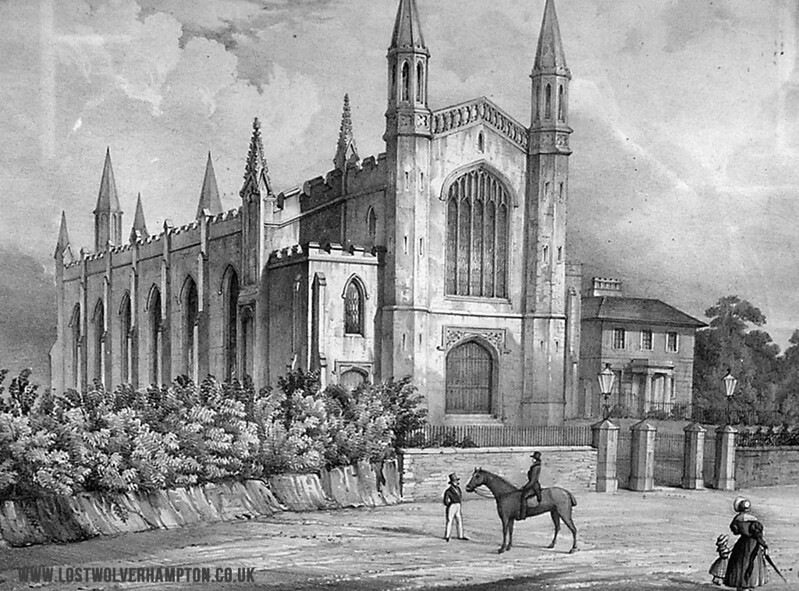

Over the years we in Wolverhampton have lost such a wonderful legacy of old Victorian & Edwardian Buildings – St Paul’s was a fine example.This engraving shows St Paul’s Church Penn Road shortly after it was erected in 1835, at an expense of £7,000
Most of the money being found by Rev.W.Dalton, first incumbent.
He also built the vicarage next door at a cost of £2,000 and his wife presented the church with its organ.St Paul’s was the first Free Church to be built in the town.
Below the old cellar head.
ParticipantNo Comments? – Must try harder!
Below the old cellar head.
ParticipantHi Don That certainly brings back many memories for me. Fellows Morton & Clayton some families making to journey’s daily From Monmre Green to the Gasworks.
What memories do you have of Albert Basin ? was it really known locally as the baby arm.
Have you any photos of the locality?
Keep them coming Don
Below the old cellar head.
ParticipantHi Don I have placed your most interesting post on our Forum / People and Places of Wolverhampton / Memories of a Wolverhampton childhood, and also on our facebook Group Lost Wolverhampton.
I would like to see this thread run and run.Below the old cellar head.
ParticipantReceived from new member Dontheturner
I was born in Walsall in 1930, and lived my school years, in Wolverhampton Road – my love of trolley buses, dates from birth! – so quiet, and comfortable – and cheap! my love of Wolves, dates also from that time, and my first job, was in Broad Street – at the BCN Top Lock, where I trained as a Toll Keeper.
My father was a Watchmaker, in business in Walsall whilst Mother was a Printer – Letterpress, and worked for the Walsall Observer newspaper.
My earliest and fondest memory- of my time, working in Wolverhampton was enjoying a roast dinner, at the Dining room, just in Piper’s Row!Hello Don
Welcome to the forum 1930! you have a good chance of being our oldest active member .
Being born close by to Littles Lane in 1937 I spent many happy hours sitting on the air-raid shelters alongside the old Victoria Basin in the 1940’sYou must have many stories you could tell us about the Boatees that pursued their livleyhood at that time around Broad Street and Horseley Fields.
So please now you have me hooked dont end it here.

Below the old cellar head.
- AuthorPosts
